
Tadelakt is a lime plaster from Morocco, polished with stones and sealed with black soap until it sheds water. It makes a seamless shower with no grout lines, and it can be repaired rather than torn out.
Zach applies our tadelakt himself, and we bring samples to the consultation so you can see and feel the finish. This guide covers what it is, how it goes on, where it works in a house and how it compares to tile.
What Is Tadelakt?
Tadelakt is a traditional Moroccan lime plaster finish. The name comes from the Arabic word “talikt,” which refers to the massaging or polishing action used in the application process. It is made from a specific type of hydraulic lime quarried near Marrakech, combined with water and sometimes natural pigments, and applied in multiple coats.
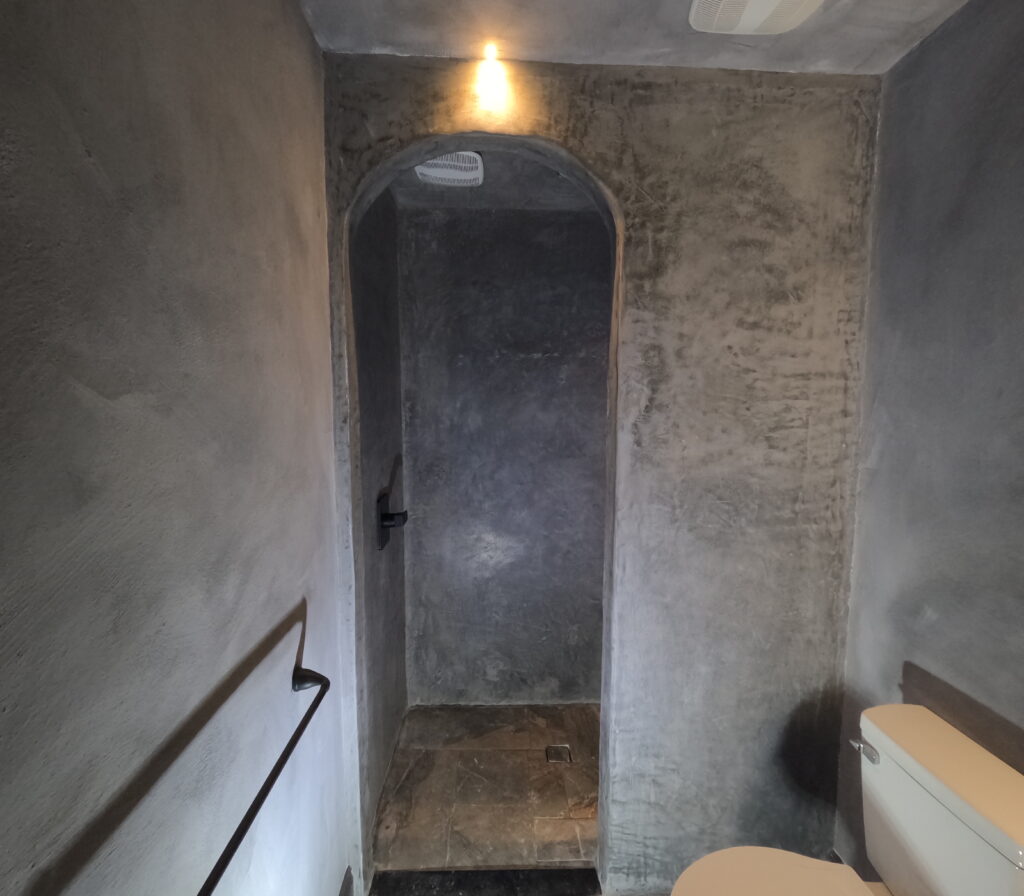
What makes Tadelakt unique among plaster finishes is its waterproofing performance. The finishing process involves polishing the final plaster coat with a smooth stone (traditionally a river stone) while the plaster is still partially wet. This action compresses the surface, closes the pores, and creates a density that repels water. The process is completed with the application of black soap (savon beldi), a potassium-based olive oil soap that reacts chemically with the lime to further enhance water resistance and produce the characteristic sheen.
The result is a monolithic wall surface with no grout lines, subtle tonal variation, and a quiet polish that reflects light differently at different times of day. It is alive in a way that tile is not.
A Brief History of Tadelakt
Tadelakt has been used in Moroccan hammams (traditional steam baths) and riads (courtyard homes) for at least a thousand years. The hammam tradition in Morocco requires a finish that can withstand constant moisture, steam, and use while remaining beautiful. Tadelakt met that requirement long before modern waterproofing products existed.
The traditional application is still practiced by skilled artisans (maâlem) in Morocco, where the knowledge is passed down through generations of craftspeople. The Marrakech lime that produces authentic Tadelakt has specific mineralogical properties that contribute to the finish’s performance, and the application technique is as important as the material.
European architects and designers began incorporating Tadelakt into contemporary interiors in the late 20th century, drawn to its material honesty, its reference to ancient craft traditions, and its visual qualities in modern spaces. It arrived in American design consciousness more gradually and is now actively sought by homeowners who want something that positions their renovation outside the category of “any nice house.”
How Tadelakt Is Applied
Tadelakt application is a multi-day, skilled craft process. There are no shortcuts. Understanding the application sequence helps explain why skilled application matters so much to the final result.
Surface Preparation
Tadelakt requires a sound, stable substrate. In new construction, cement board or fiber cement backer in wet areas provides the appropriate base. In existing walls, the condition of the substrate must be assessed and, if necessary, repaired or reinforced. Any movement in the substrate will eventually telegraph through the plaster layer as cracking, so structural stability is a prerequisite.
The surface is primed appropriately before the first plaster coat. Proper primer selection for the substrate type ensures adhesion and reduces moisture movement through the substrate during application.
First Coat (Scratch Coat)
The first coat establishes the base layer and the thickness. It is applied by trowel, worked to cover the substrate evenly, and then scratched to provide mechanical key for the next coat. The scratch coat is allowed to cure to the appropriate stage before the next coat is applied.
Second Coat (Base Coat)
The second coat builds up the thickness and establishes the working layer. The texture is refined at this stage. The applicator is working toward a flat, consistent surface that will receive the finish coats.
Finishing Coat and Stone Polishing
Three finish coats follow the base coat. This is where the skill of the applicator makes the greatest difference. Each is applied thin and brought to a consistent surface. Before the plaster reaches full set, the surface is polished with a smooth river stone in a circular motion. This compressive polishing closes the surface pores, creates density, and begins to develop the characteristic sheen.
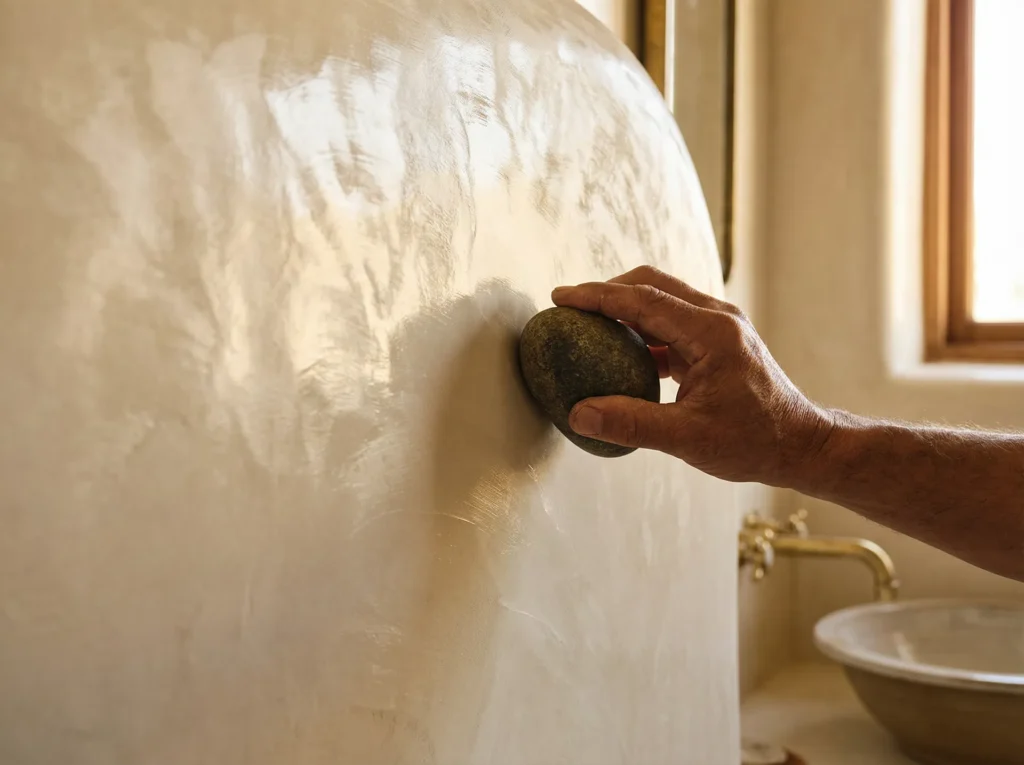
The polishing stage requires experienced hands. The timing window within which polishing produces the correct result is narrow. Too early and the plaster deforms. Too late and the surface cannot be closed. The Moroccan craftspeople who developed this technique spent years learning to read the plaster’s state accurately.
Black Soap Application
Once the plaster has cured appropriately, black soap (savon beldi) is worked into the surface in multiple applications. The potassium in the soap reacts with the calcium in the lime plaster, producing a chemical bond that further densifies the surface and enhances water resistance. This step also develops the finish’s final sheen and color depth.
Sealing
In residential applications, particularly in shower enclosures and areas of intense water exposure, a penetrating lime-compatible sealer is applied after the soap treatment. This extends the finish’s water resistance and reduces the frequency of maintenance required to maintain the waterproofing performance.
Where to Use Tadelakt in Your Home
Tadelakt’s waterproofing performance makes it technically suitable for wet environments, but its visual character also makes it appealing in dry interior spaces. The right application depends on understanding both dimensions.
Shower Enclosures
The shower is the most requested Tadelakt application in residential renovation, and it is where the finish makes the most dramatic statement. A Tadelakt shower enclosure has no grout lines. The walls, the floor if specified, and any built-in niches or benches are continuous monolithic surfaces. The visual effect is of a sculpted space rather than an assembled one.
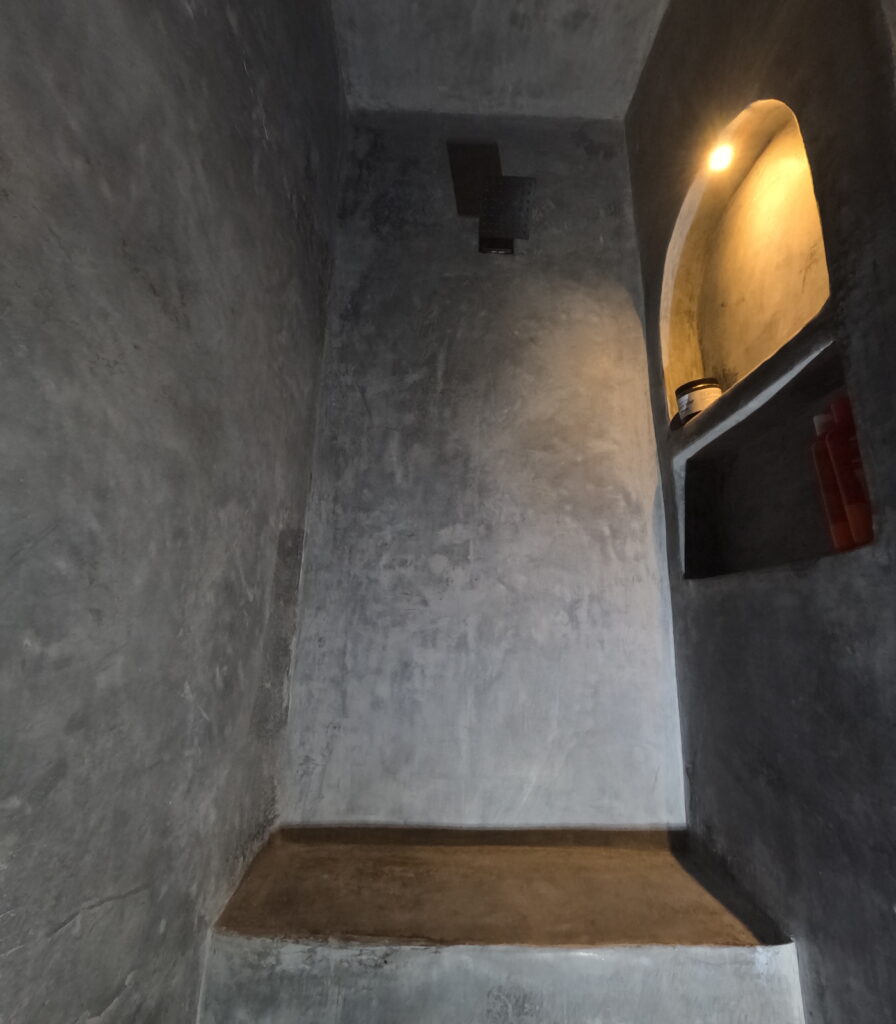
In Charleston, where shower renovations are one of the most active categories in our bathroom renovation work, Tadelakt is increasingly specified as the primary enclosure finish. It performs in the steam and moisture environment of a shower, ages with more character than tile, and produces a bathroom that feels genuinely different from anything that could be achieved with standard materials.
Bathroom Walls and Surrounds
Beyond the shower, Tadelakt is well suited to bathroom walls, vanity backsplashes, and bathtub surrounds. In a primary bathroom with a freestanding soaking tub, Tadelakt on the surrounding walls creates a spa environment with no grout maintenance and a visual depth that paint and tile cannot match.
Kitchen Backsplashes and Walls
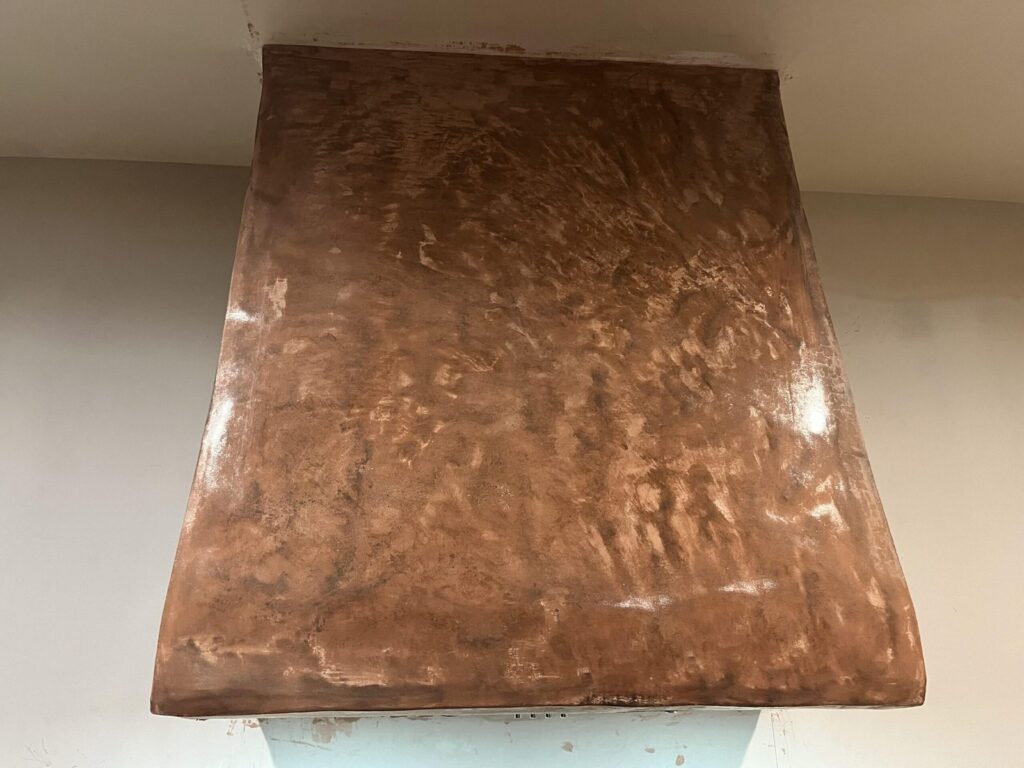
Tadelakt is appropriate for kitchen backsplash applications in areas that do not see direct high-heat exposure from the cooking surface. Applied in a warm natural tone or as a neutral, it creates a backsplash wall that integrates with stone countertops more seamlessly than tile can.
Fireplace Surrounds
The thermal mass of a lime plaster finish makes it appropriate for fireplace surrounds and mantels. Tadelakt or a closely related lime-based finish applied to a fireplace surround develops warmth and character over time that no manufactured product can replicate. The lime’s inherent fire resistance is also a practical advantage.
Interior Accent Walls and Ceilings
In dry interior spaces, Tadelakt’s visual character can be used for accent walls, entry halls, and ceilings where you want a surface that goes beyond paint. The tonal variation and polish of the finish create a quality of surface that reads as crafted rather than applied.
Tadelakt vs. Traditional Tile: A Practical Comparison
Most homeowners considering Tadelakt are deciding between Tadelakt and a high-end tile specification. Here is an honest comparison across the dimensions that matter.

Appearance
Tile is a grid. No matter how large the format or how refined the material, tile is defined by its joints and grout lines. Large-format tile minimizes grout lines but does not eliminate them. Tadelakt is a continuous surface with no interruptions. The visual character is fundamentally different: one is assembled, the other is unified. For homeowners who want a shower enclosure that looks like a single carved space, Tadelakt is the only material that achieves it.
Durability
Both materials, properly installed, are highly durable. Tile’s vulnerability points are its grout joints: grout can crack, discolor, and harbor mold over time. A Tadelakt surface has no grout joints and no grout maintenance, but it is not indestructible. Hard impacts can chip or crack the plaster layer, and the surface requires periodic maintenance to sustain its waterproofing performance.
Maintenance
Tile: grout sealing annually or biannually, regular cleaning to prevent mold in grout lines, and re-grouting if grout begins to crack or fail.
Tadelakt: periodic application of black soap (once or twice a year in a heavily used shower) to maintain the waterproofing seal and the surface sheen. No grout lines means no grout maintenance. The soap application takes 15 to 30 minutes and produces an immediate visual improvement in the finish.
Installation Time
A tile shower goes in fairly quickly once the substrate is ready. Tadelakt takes longer: a scratch coat and a base coat, then three finish coats with cure time between them and stone polishing, and then at least two weeks before the shower is used. That affects the project schedule and adds to the material and labor cost.
Cost
Tadelakt costs more than tile for most applications. The material cost is competitive with high-end natural stone tile, but the skilled labor required for correct application makes the total installation cost higher than equivalent tile work. That premium is justified by the uniqueness of the finish and the absence of long-term grout maintenance, but it is a real cost difference that should be understood before specifying.
Availability of Skilled Applicators
This is the most practical constraint on Tadelakt adoption. Most tile installers cannot apply Tadelakt. The application technique requires specific training and practice. Tadelakt applied by an untrained person will not perform correctly and will not produce the expected appearance. When considering Tadelakt, the first question is not “can I afford it?” but “can I find someone who knows how to do it correctly?”
This is a real concern in the Charleston market. Zach applies our tadelakt himself, and we bring samples to the consultation. If you are considering Tadelakt for a project, the applicator’s experience is the most important quality variable in the decision.
Cost Considerations
Tadelakt pricing varies significantly based on the scale of the application, the complexity of the space, and the preparation required.
Price depends on the size of the job, the details and the product. As a rule of thumb, tadelakt is the most involved of these finishes; Venetian plaster is generally less, with a wide range from marmorino to specialty finishes; and microcement is one of the more affordable options. We give a detailed estimate at the consultation.
In the context of a full bathroom renovation, tadelakt is a premium over tile, and it is usually a smaller share of the total project than homeowners expect.
Frequently Asked Questions
Is Tadelakt truly waterproof?
Yes, when correctly applied with the stone polishing process, black soap treatment, and appropriate sealer. Traditional Tadelakt has been waterproofing Moroccan hammam floors and walls for centuries in far more demanding conditions than a residential shower. The waterproofing is a result of the chemistry of the cured lime and the surface density created by polishing, not just a coating on top.
How long does Tadelakt last?
Properly applied and maintained, Tadelakt can last decades. The hammams in Marrakech contain Tadelakt surfaces that are generations old and still performing. In a residential shower with appropriate maintenance (periodic black soap application), a well-applied Tadelakt surface should last the life of the renovation.
Can Tadelakt be used on floors?
Yes, with appropriate specification. Shower floors in Tadelakt require more attention to slope for drainage and more frequent black soap maintenance due to the greater abrasion from foot traffic. Some applicators prefer to use a polished cement or micro-cement on floors for higher abrasion resistance, with Tadelakt on the walls where it performs most predictably.
Can Tadelakt be repaired if it chips or cracks?
Small repairs are possible but require skilled work to blend seamlessly with the existing surface. A major advantage of Tadelakt over tile is that repairs do not require removing and replacing individual tiles with visible grout joint interruptions. A skilled applicator can patch and re-polish a damaged area to a finish that reads as continuous.
What colors are available in Tadelakt?
Traditional Tadelakt comes in the natural lime color, which is an off-white to warm cream. Natural and mineral pigments can be added to the plaster to achieve a range of warm tones: terracotta, ochre, warm gray, and deeper earth tones. Very light tones and very dark tones are achievable but require more skill to produce consistently. We review color samples in your specific light conditions before committing to a color specification.
How do I maintain Tadelakt in my shower?
Wipe down the walls after use to remove soap residue and water. Apply black soap to the surface once or twice a year (or more frequently if you notice the surface is losing its sheen). The black soap application takes 15 to 30 minutes and restores the waterproofing seal and the visual quality of the finish.
Is Tadelakt appropriate for cold or humid climates?
Tadelakt performs well in warm and humid climates like Charleston’s. The material is lime-based and breathable, which is an advantage in humid environments compared to non-breathable waterproofing membranes. Cold climates with significant freeze-thaw cycles can stress exterior lime applications, but interior Tadelakt applications are not affected by outdoor temperature cycles.
See Tadelakt in a Charleston Renovation
If you are considering Tadelakt for a bathroom renovation, kitchen update, or any interior application in your Charleston home, the next step is a conversation. We can discuss your space, show you sample boards, and help you understand whether Tadelakt is the right specification for your project.
Visit our Tadelakt and Specialty Plaster service page for more information, or contact us to schedule a consultation. Call (843) 709-6140.
Related reading: Venetian plaster vs. limewash · See our recent work and before-and-afters
OTHER SERVICES
FREE CONSULTATION
Let’s talk about your project
Let’s discuss your renovation vision and create a plan built to last.
843-709-6140Request a consultationWhat happens next: Zach calls you back and sets up a visit to your house. We talk about how you want to use the space, the style of the house and the materials that suit it. You get a budget and a design with the scope, we work through the options together, and then you get a final proposal.