
Two finishes come up in nearly every conversation about specialty wall treatments: Venetian plaster and limewash. Both are lime-based. Both are applied by hand. Both produce results that standard paint cannot achieve. And both are regularly requested in renovation and new construction projects where homeowners want something that feels crafted, layered, and genuinely different from a painted wall.
They are also quite different from each other. The visual character of Venetian plaster and the visual character of limewash are not interchangeable, and the right choice between them depends on the room, the architecture, the light, and the effect you are after.
At Luxurious Renovations, we apply both finishes in Charleston-area homes through our specialty plaster services. This guide is meant to give you a clear, honest comparison so that when you are sitting across from a designer or contractor and the conversation turns to wall finishes, you know what you are actually choosing between.
What Is Venetian Plaster?
Venetian plaster is a polished lime plaster finish applied in multiple thin coats and burnished to a smooth, semi-reflective surface. The technique was codified in Renaissance-era Venice (hence the name) and has been in continuous use in European architecture ever since. The material is lime putty combined with marble dust, applied with a trowel in thin overlapping layers and then burnished with a steel trowel to compress and polish the surface.
The result is a wall with visual depth, subtle tonal variation between layers, and a surface that reflects light in a way that is distinct from paint. Under direct light, Venetian plaster has a quiet sheen. In raking light, the micro-texture of the troweled surface creates gentle shadow variation that reads as dimensionality. The overall effect is of a wall that has been built, not just coated.
Venetian plaster is most commonly associated with warm ivory, cream, and stone tones, but it can be produced in a wide range of colors, including grays, warm whites, and earth tones. Darker applications are more technically demanding but achievable in the hands of an experienced applicator.
What Is Limewash?
Limewash is a diluted lime paint applied in multiple thin coats, each allowed to partially dry before the next is applied. The technique is one of the oldest wall finish methods in the world, used for millennia on interior and exterior surfaces in buildings across Europe, North Africa, and the Mediterranean. Traditional limewash is made from lime putty thinned with water, sometimes with the addition of natural pigments.
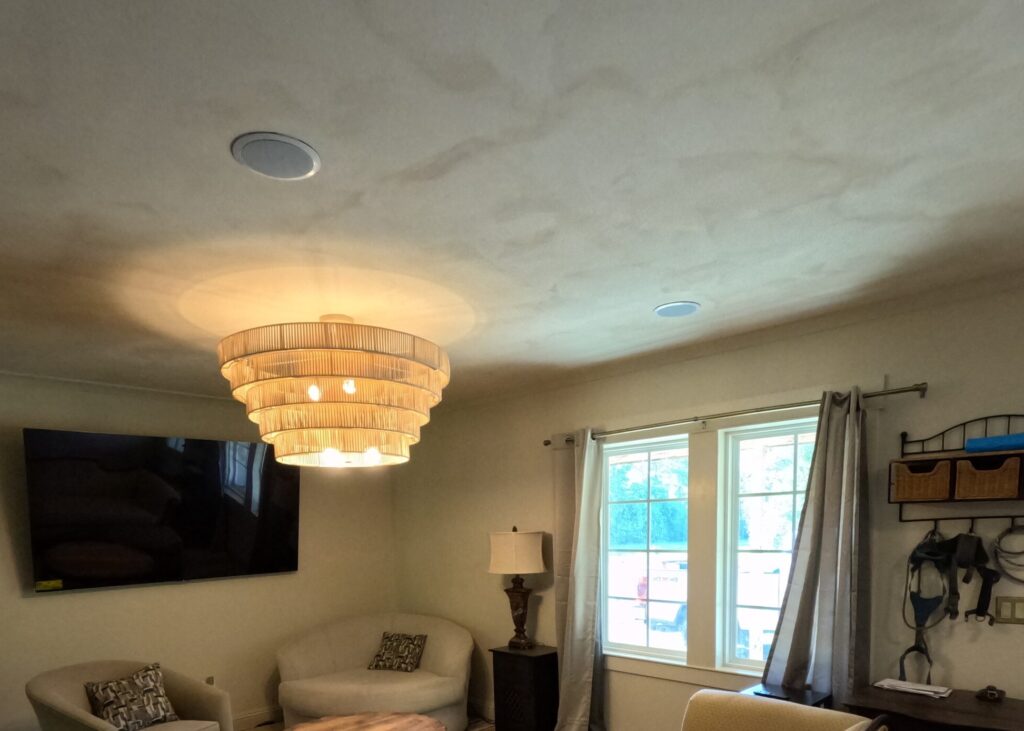
The finish limewash produces is matte, chalky, and layered. Unlike paint, limewash does not create a uniform coating. Because each coat is translucent and applied by hand, the layers build up with natural variation: lighter here, slightly deeper there, with movement across the surface that reads as age and patina. The result looks as though it has always been there.
Limewash is almost always lighter in color when wet than when dry. The carbonation process (lime reacting with CO2 in the air as it cures) lightens the surface and develops the characteristic matte, chalky quality that distinguishes limewash from paint.
Side-by-Side Comparison
Appearance and Texture
Venetian Plaster: Semi-reflective, polished, smooth to the touch. Has visual depth from the layered application and micro-variation in the burnished surface. Reads as refined, elegant, and sophisticated. Works especially well in formal spaces, dining rooms, primary bedrooms, and rooms where you want a surface that commands attention without being overtly decorative.
Limewash: Matte, chalky, and textural. Has the appearance of age and use. Soft tonal movement across the surface creates warmth without polish. Reads as relaxed, lived-in, and authentic. Works especially well in informal spaces, living rooms, dining rooms with a more casual character, bedrooms, and historic or older homes where a patinated surface feels native to the architecture.
The clearest visual distinction: Venetian plaster has a sheen. Limewash does not.
Depth and Dimensionality
Both finishes have more visual depth than standard paint, but they achieve that depth differently.
Venetian plaster’s depth comes from the polished surface and the way it reflects light. The burnishing process creates a density at the surface that reads differently at different angles.
Limewash’s depth comes from the layered, semi-transparent coats and the tonal variation between them. The surface is absorptive rather than reflective. Its dimensionality is perceived through color and texture rather than sheen.
Application Process
Venetian Plaster: Applied in three to five thin coats with a steel trowel. The final coat is burnished in overlapping circular strokes while still partially wet, using the trowel to compress and polish the surface. Each coat must be applied at the right stage of the previous coat’s set. The application is time-consuming and requires genuine skill. How much wall a day covers depends on the wall, the number of coats and the cure time between them.
Limewash: Applied in multiple thin coats (typically three to five) with a wide brush or roller, with each coat partially dry before the next is applied. The application involves deliberate variation in brush direction and pressure to create the characteristic movement in the surface. The process is less technically demanding than Venetian plaster but still requires experience to produce a result that reads as intentional rather than inconsistent.
Durability
Both finishes are more durable than standard latex paint. Lime is a naturally hard material once fully carbonated, and both finishes develop hardness over time as they continue to cure.
Venetian Plaster: The polished surface is hard and resistant to minor abrasion. It is more vulnerable to impact damage (sharp corners, furniture contact) than painted drywall. Chips and gouges can be repaired by a skilled applicator but require skill to blend.
Limewash: The matte surface is more susceptible to scuffing than polished Venetian plaster but more forgiving of minor abrasion in terms of appearance (a small scuff in a matte, textured finish reads less dramatically than in a polished one). Limewash can also be refreshed with a diluted wash coat over time, which is part of its maintenance appeal.
Maintenance
Venetian Plaster: Wipe cleaning with a damp cloth. Do not use abrasive cleaners. In areas of high humidity, a breathable sealer can be applied to reduce moisture sensitivity. Scratches and chips require professional repair to blend correctly.
Limewash: Wipe cleaning with a damp cloth. Because limewash is intentionally variable in tone and texture, minor marks and scuffs are less visible than in a more uniform finish. Limewash can be refreshed with an additional wash coat if areas become worn or if you want to deepen the color over time. This is a genuine advantage of the material: it is maintainable in a way that most other finishes are not.
Cost
Both finishes cost more than standard paint. The premium reflects skilled labor, material quality, and multi-coat application process.
Venetian Plaster: Cost ranges widely, from a basic marmorino finish to high-end specialty finishes that mimic marble or fluting.
Limewash: Usually the simpler application of the two, since it goes on thin in several brushed coats.
Venetian plaster generally costs more than limewash for equivalent square footage because the application is more technically demanding and time-consuming.
Which Finish Works Best in Which Rooms?
Living Rooms
Both finishes work in living rooms, but they produce different characters.
Venetian plaster in a living room reads as formal and polished. It is a strong choice for rooms with high ceilings, classical architectural detail, or an explicitly elegant design direction. In a traditional Charleston living room with crown moulding and a marble fireplace, Venetian plaster feels native.
Limewash in a living room creates warmth and informality. It is better suited to rooms with a more relaxed design direction, exposed brick, natural wood, or linen and cotton furnishings. In a beach house, a farmhouse, or a home with a more casual aesthetic, limewash reads more naturally than polished plaster.
Dining Rooms
Dining rooms respond well to both finishes. Venetian plaster creates an intimate, refined atmosphere under candlelight or low-level artificial light. The sheen catches the light and adds warmth. Limewash creates a softer, more diffuse glow and works particularly well in rooms with warm artificial light and natural wood furniture.
Primary Bedrooms
Limewash is often the preferred choice for primary bedrooms because its matte quality and soft tonal variation create a restful, calm atmosphere. Venetian plaster is also appropriate for primary bedrooms with a more formal or dramatic design direction.
Kitchens
Venetian plaster on kitchen walls (outside the backsplash area, which is better suited to tile or Tadelakt for washability) creates a refined, cohesive background for cabinetry and stone countertops. Limewash in a kitchen works best in rooms with a more rustic or farmhouse character.
Bathrooms
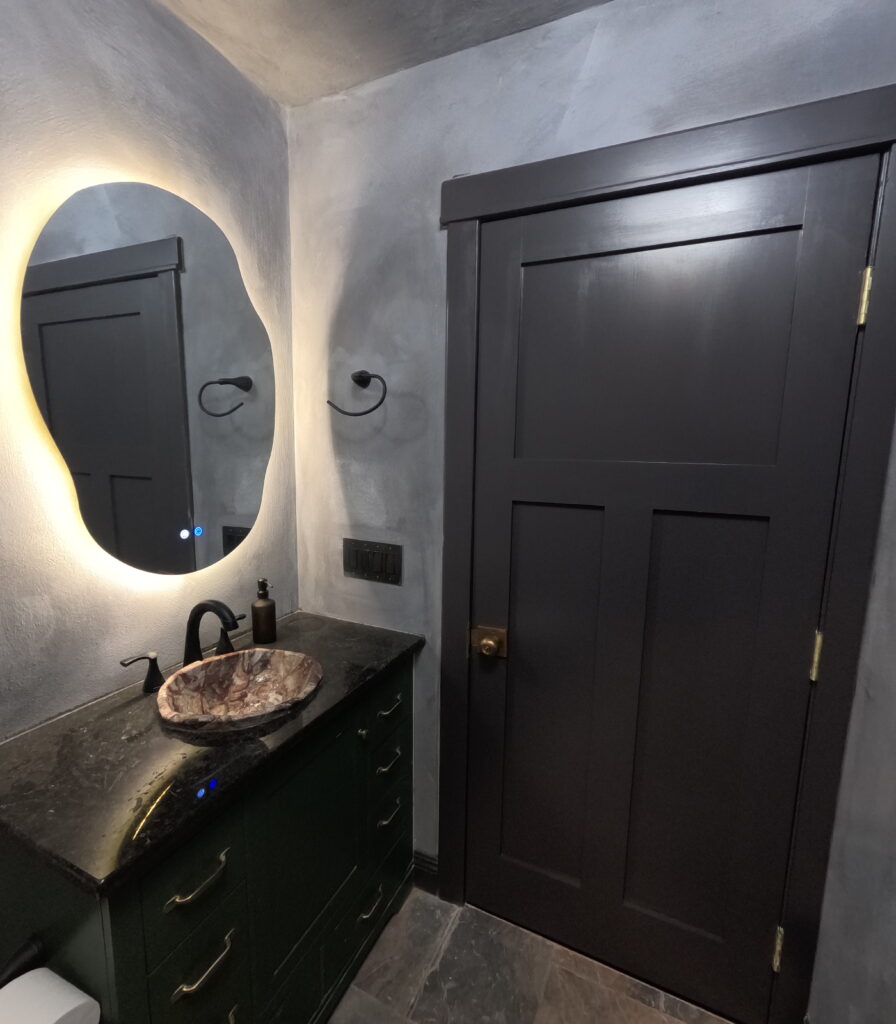
For wet applications (shower walls, tub surrounds), neither Venetian plaster nor standard limewash is appropriate without modification. Tadelakt is the correct lime-based finish for wet environments. For dry bathroom walls outside the shower zone, both finishes are appropriate. Our interior refresh services often incorporate limewash in bathroom wall areas adjacent to Tadelakt shower enclosures for a cohesive material story.
Historic Homes
Limewash is the historically authentic choice for older homes. Traditional buildings in Charleston and throughout the American South were finished with lime-based washes and plasters. A limewash finish on the walls of a Federal or colonial revival home is not just aesthetically appropriate but historically grounded. For homeowners restoring or renovating historic properties, limewash creates continuity with the material traditions of the building.
Can You Combine the Two Finishes?
Yes, and the combination can be effective. A common approach is to use Venetian plaster in the more formal spaces of a home (dining room, entry hall, living room) and limewash in the more relaxed spaces (bedrooms, family room). The two finishes share the same material DNA (both are lime-based) and a similar palette, so they can read as related without being identical.
Another combination approach is to use limewash on the walls and Venetian plaster on architectural features: a fireplace surround, a niche, or a feature wall. This creates hierarchy within a room without relying on different paint colors.
The Question Paint Buyers Ask: Why Not Just Use Specialty Paint?
There are specialty paints marketed as “Venetian plaster effects” and “limewash-style” finishes. They are not the same thing.
The difference is material. Venetian plaster and limewash are lime-based. Lime has specific optical properties: it is semi-translucent when wet, carbonates and hardens as it cures, and develops a depth of surface that acrylic paint cannot replicate. Specialty paints that attempt to mimic these effects produce something that reads as similar at first glance and different on close inspection. The depth is not there. The surface does not change the way it reads under different lighting conditions.
For homeowners who want the real thing, the real thing is what we apply. For homeowners who want an approximation at lower cost, the specialty paints are an option, and we are honest about that distinction.
How to Decide: A Simple Framework
If you want a polished, refined surface with sheen and visual depth, and the room is formal or semi-formal in character: choose Venetian plaster.
If you want a matte, chalky surface with soft tonal movement and patinated character, and the room is relaxed, historic, or organic in character: choose limewash.
If the application is in a wet environment (shower, tub surround): choose Tadelakt.
If you are still not sure, the most useful thing you can do is see both finishes in person under the actual lighting conditions of your space. We bring sample boards to consultations and strongly recommend reviewing them in the room rather than on a computer screen. The difference between the two finishes is much more apparent in person.
Frequently Asked Questions
Can limewash be applied over existing paint?
Yes, in most cases, with surface preparation. The wall must be clean and any glossy paint must be dulled with a light sanding or bonding primer to allow the limewash to adhere. We assess existing wall conditions during the consultation.
Can Venetian plaster be applied over existing paint?
Yes, with appropriate surface preparation. The existing paint must be clean, dull, and sound. Skim coating or applying a bonding primer is typically required before the first plaster coat.
Do these finishes require a specific type of wall surface?
Both finishes can be applied over drywall, plaster, and masonry. Surface preparation requirements vary by substrate. We specify the correct preparation for each project.
Can limewash be touched up if an area gets damaged?
Yes. This is one of limewash’s practical advantages. A diluted wash applied over a damaged area blends naturally with the surrounding surface because the material’s inherent variation makes exact matching less critical.
Can I paint over Venetian plaster or limewash if I change my mind?
Yes. Both finishes can be painted over with standard latex paint after appropriate priming. They are not reversible in the sense of restoring the original drywall appearance, but they do not prevent future repainting.
How long do these finishes take to apply?
It depends on the size of the room, the condition of the walls, the number of coats and the cure time each coat needs; Venetian plaster usually takes longer than limewash. Multi-room projects are staged to allow cure time while keeping the project moving forward.
Do you offer samples before committing to a full application?
Yes. We strongly recommend reviewing sample boards in your specific space before finalizing a finish selection. Color and sheen read differently under different light sources, and a sample in the actual room is far more informative than a photo or a color chip.
Ready to Choose Your Wall Finish?
If you are considering Venetian plaster, limewash, or Tadelakt for your Charleston home, we can walk you through the options and help you make the right selection for your specific space. We bring sample boards to consultations and have applied both finishes extensively in Charleston-area renovations.
Visit our specialty plaster page to see examples of our work, or contact us to schedule a consultation. Call (843) 709-6140.
Related reading: The complete guide to tadelakt plaster · See our recent work and before-and-afters
OTHER SERVICES
FREE CONSULTATION
Let’s talk about your project
Let’s discuss your renovation vision and create a plan built to last.
843-709-6140Request a consultationWhat happens next: Zach calls you back and sets up a visit to your house. We talk about how you want to use the space, the style of the house and the materials that suit it. You get a budget and a design with the scope, we work through the options together, and then you get a final proposal.